Notes on Loading and Exporting Quartz Slabs
Quartz slabs are brittle, large and heavy. For loading and export, it is necessary to balance protection, compliance and transportation safety. The core precautions are as follows:
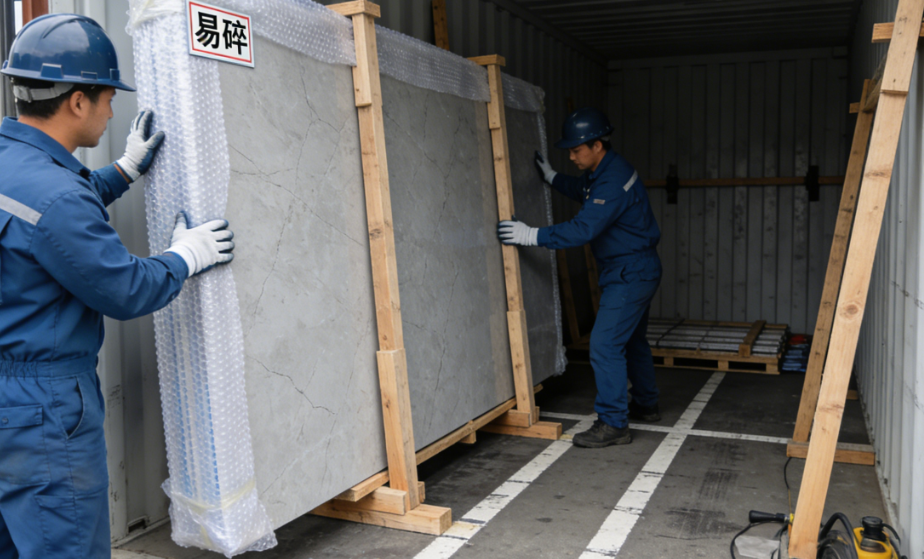
Packaging must meet standards: use wooden packaging compliant with ISPM15, complete fumigation and mark the IPPC logo to avoid rejection by the destination country. Slabs should be placed vertically with polished surfaces facing each other. Fill gaps with foam or pearl cotton, add corner protectors to edges and corners, reinforce the outer layer with steel strips, and cover the surface with film to prevent scratches, eliminating the risk of loosening and movement.
Loading must be standardized: control the total weight within the container load capacity, ensure balanced weight distribution, and place wooden crates perpendicular to the container's bottom crossbeams to disperse pressure. Tighten gaps between slabs and inside the container with wooden strips, and reinforce using the "field-shaped" packing method to avoid damage during maritime turbulence or loading/unloading. Strictly prevent center-of-gravity deviation.
Compliance must be ensured: products must pass radioactivity testing (meeting GB 6566-2010 Class A standards), and prepare the certifications and third-party test reports required by the destination country. Documents must be complete and consistent with goods, including customs declaration forms, test reports and packing lists, to avoid customs clearance delays caused by incorrect declarations.
Confirm the special requirements of the destination country in advance, such as Australia's restrictions on artificial quartz stone. Meanwhile, take photos for record during loading and handle with care throughout the process to fully avoid the risks of goods damage and customs clearance issues.
SHINE QuartzStone