The Advantageous Impact of the Turbulent Global Situation on the Export Trade of Marble and Quartz Stone
Against the backdrop of escalating global turmoil, the restructuring of trade patterns and adjustments in regional demand have brought unique advantageous opportunities for the export trade of marble and quartz stone, driving a structural breakthrough in the export of these products.
Amid the turbulent situation, the restructuring of the global supply chain has spawned regional trade advantages. Some traditional major stone-exporting countries are plagued by production capacity constraints and logistics disruptions due to geopolitical conflicts and energy shortages. In contrast, countries with complete processing systems such as China have achieved stable supply relying on mature industrial chains, filling the gap in the international market. At the same time, the implementation of regional trade agreements such as RCEP has reduced tariff barriers for stone exports within the region. With their wide applicability in home decoration and commercial decoration, marble and quartz stone have become core categories for regional trade growth.
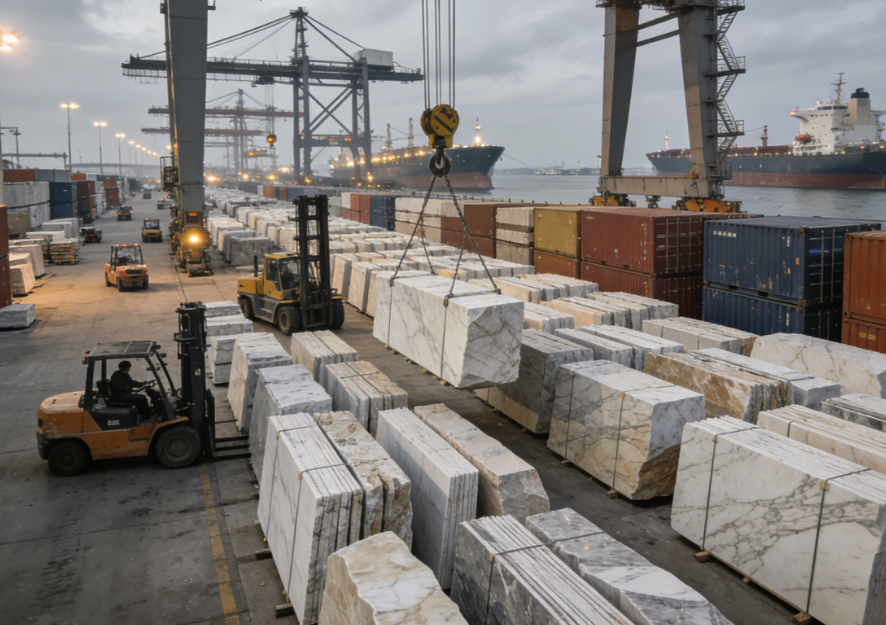
The product characteristics are compatible with market demand in a turbulent environment, highlighting competitive advantages. The decorative value of marble and the wear resistance and easy maintenance of quartz stone meet the global demand for infrastructure upgrading and existing housing renovation. Even in the face of economic fluctuations, the rigid demand attribute still supports stable exports. In addition, the United States' exemption of high tariffs on Brazilian quartz stone has driven the contrarian growth of quartz stone exports, while marble has broken through the technical barriers of European and American markets through high-end customization upgrades, enhancing brand premium capacity.
Turbulence has forced industrial transformation and strengthened the core competitiveness of exports. External pressures such as adjustments to export tax rebate policies have promoted enterprises to move away from reliance on low-end processing, improve material yield and optimize quality through intelligent processing technology, and expand emerging markets such as the Middle East and Africa to reduce single-market risks. The application of flexible models such as transshipment trade has also helped enterprises avoid trade barriers and continuously seize international market share.
In summary, although global turbulence brings uncertainties, it also forces the stone industry to upgrade and reshape the trade pattern. Relying on the comprehensive advantages of the supply chain, product characteristics and market adaptability, marble and quartz stone have achieved steady development in export trade.
KitchenQuartz
InteriorDesign