Quartz Stone vs. Marble: Precise Adaptation to Practical and Aesthetic Scenarios
Quartz Stone: A Preferred Choice for Practical Scenarios
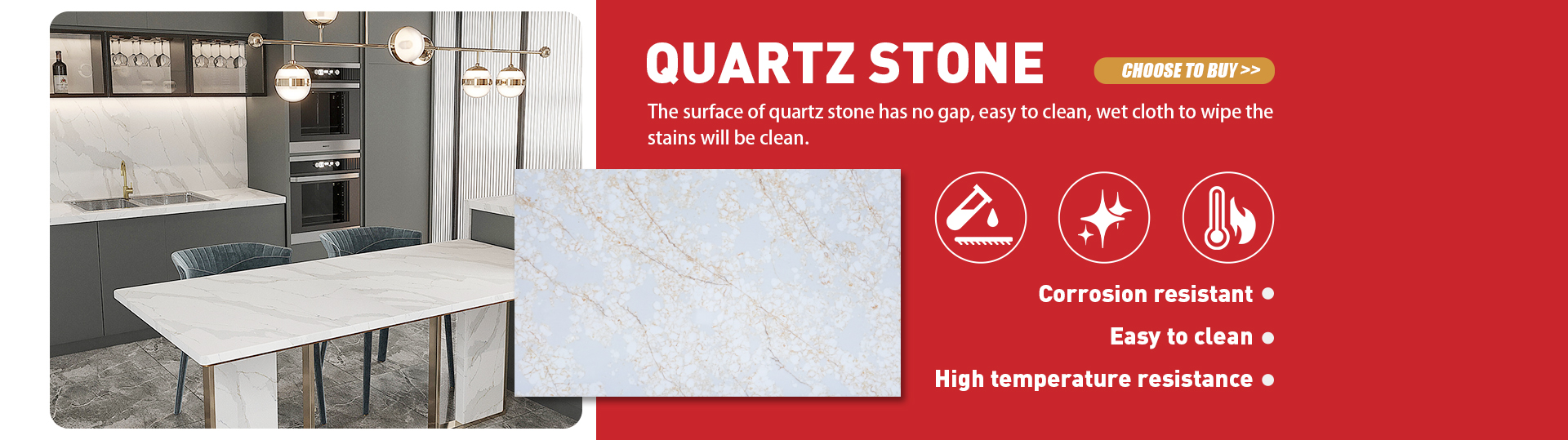
Composed of over 90% natural quartz crystals mixed with resin and pressed at high temperatures, quartz stone boasts high hardness, scratch resistance, and impermeability, making it an ideal option for high-frequency use scenarios. Kitchen countertops are its core application area—daily chopping, sauce spills, and placing hot kitchen utensils will not cause damage, and cleaning only requires a damp cloth, which fits the fast-paced life of modern families. Bathroom countertops and sinks are also well-suited for quartz stone, as it can resist chemical corrosion from toiletries and maintain long-term cleanliness. Additionally, public spaces such as shopping mall service desks, hospital consultation tables, and office building corridor floors, characterized by dense foot traffic and easy friction and stains, can significantly reduce maintenance costs thanks to quartz stone’s wear and dirt resistance. Some styles with stone-like textures can also balance decorative effects.
Marble: An Elegant Touch for Aesthetic-Driven Spaces
As a natural stone, marble is favored in high-end decorative scenarios for its unique texture and warm luster. In home decoration, living room feature walls and entrance floors are its classic applications—the naturally formed ink-wash-like and cloud-like textures are one-of-a-kind, which can instantly enhance the space’s elegance and adapt to styles such as European and new Chinese. Choosing marble for dining table tops and coffee table surfaces, paired with soft soft furnishings, can create an elegant dining and leisure atmosphere. In commercial scenarios, marble is often used to highlight quality in five-star hotel lobbies, luxury store walls, and high-end villa renovations. It should be noted that marble is relatively soft and prone to staining, so it is more suitable for low-frequency use scenarios that prioritize aesthetic expression, and regular sealing and maintenance are required.
The essential difference in application scenarios between the two lies in the adaptation of material properties: quartz stone relies on practicality to gain a foothold in functional spaces, while marble empowers decorative spaces with its aesthetic appeal. They can be flexibly selected based on usage frequency, maintenance needs, and style positioning.
Shin White Marble Shandong stone